Latest Articles

See All Articles →
Who Pays to Cross
Richard Yan

Who Pays to Cross

AI Has Ancestors Series Sep 28 · 12 min read

For a thousand years, the cost of reaching a shared language fell on the person reaching. It has moved. The linguistic map of the world is a strange document. Spain and Portugal crossed the Atlantic five centuries ago. Spanish and Portuguese are the mother tongues of most of South America. Britain governed India for under two centuries. English never displaced India’s languages. It sits in the courts, the universities, the statute book, and the corporate registry anyway. The Dutch governed t
· 12 min read
The Imprint
Richard Yan

The Imprint

AI Has Ancestors Series Sep 21 · 11 min read

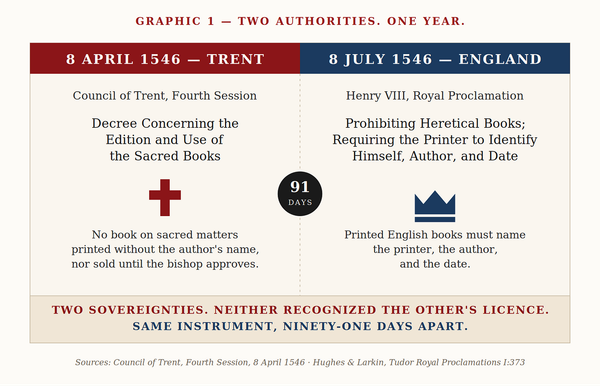
I detectors ask the finished work to confess how it was made. In 1546, two rival authorities put that information somewhere else. An AI Has Ancestors essay. The series reads AI as the fifth member of a family of encoding technologies: writing, the alphabet, the press, the wire. An ancestor teaches more than once, and this is the press’s second lesson. The full framework and the Code After Series are at codeafter.ai. On August 25, MIT published the report of its Ad Hoc Committee on AI Use in

· 11 min read
The Pallet and the Fork
Richard Yan

The Pallet and the Fork

Sep 14 · 14 min read

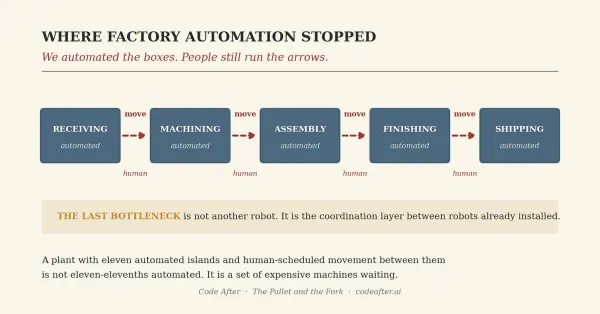
We automated the machines. We never automated the space between them. That space is where the future of factory work is being decided. I. The finishing hall The most consequential technology decision I ever made was not a technology decision. It was a decision about leather. We ran leather finishing in Shanghai. Finishing is the stage where a hide takes its lacquers and its pigments, where the surface becomes the thing the customer is actually paying for. That surface stays wet for a while.

· 14 min read
The Language That Stayed
Richard Yan

The Language That Stayed

AI Has Ancestors Series Sep 07 · 11 min read

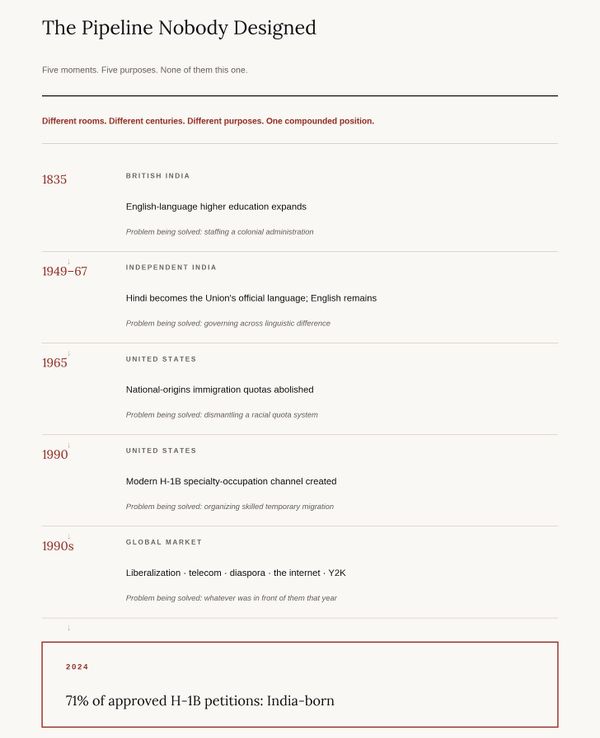
A colonial staffing decision, an Indian constitutional compromise, and two American immigration laws assembled a pipeline that none of them intended. One number is worth holding onto through the current American argument about skilled immigration. Of all H-1B petitions approved in fiscal 2024, 71 percent were for people born in India. China came second at just under 12 percent. The remaining eight countries in the top ten accounted for about 7 percent between them. Nearly two-thirds of all app

· 11 min read

Series Works

View All Series →